

Life After Angioplasty: When Can You Walk, Drive, Exercise and Return to Normal Life?





Why Is Physical Activity Important After Angioplasty?
Regular physical activity helps:
- Improve heart function
- Reduce the risk of another heart attack
- Improve blood pressure and diabetes control
- Increase stamina and energy levels
- Reduce anxiety and depression
- Improve overall quality of life
The key is to increase activity gradually and safely.
When Should I Start Walking?
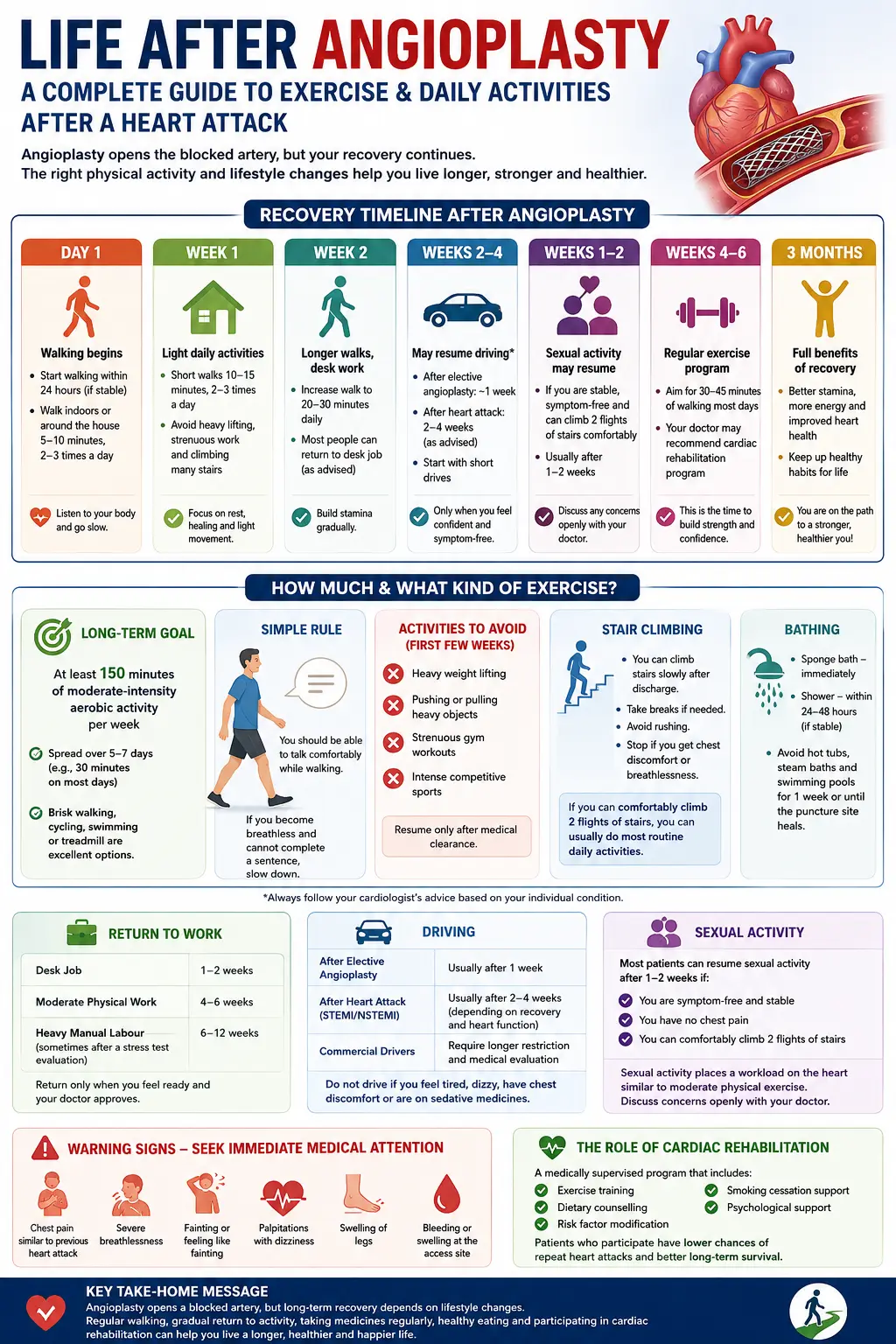
Most uncomplicated angioplasty patients can begin walking within 24 hours after the procedure.
Week 1
- Walk indoors or around the house.
- Start with 5–10 minutes at a comfortable pace.
- Walk 2–3 times daily.
- Avoid climbing multiple flights of stairs repeatedly.
Weeks 2–4
- Increase walking duration to 20–30 minutes daily.
- Gradually increase pace.
- Aim for a total of 30–45 minutes of walking per day.
After 4–6 Weeks.
- Brisk walking for 30- 45 minutes becomes the preferred exercise.
A simple rule: You should be able to talk comfortably while walking. If you become breathless and cannot complete a sentence, slow down.
What Activities Should Be Avoided Initially?
For the first few weeks: Avoid:
- Heavy weight lifting
- Pushing or pulling heavy objects
- Strenuous gym workouts
- Intense competitive sports These activities should be resumed only after medical clearance.
When Can I Take a Bath on My Own?
Most patients can:
- Take a sponge bath immediately after discharge
- Take a regular bath within 24–48 hours
- Prefer shower than mug-bucket bath Avoid:
- Cold water baths
- Swimming pools
When Can I Climb Stairs?
Most patients can climb stairs slowly after discharge. Tips:
- Take breaks if needed.
- Avoid rushing.
- Stop if chest discomfort or significant breathlessness develops.
If you can comfortably climb two flights of stairs(20-30 steps), you can generally tolerate most routine daily activities.
When Can I Drive?
Cars/Bikes
- Usually after 2–4 weeks depending on recovery and heart function.
Commercial Drivers (Trucks/Bus with heavy steering)
- Often require a longer restriction period and formal medical evaluation.
When Can I Return to Work?
Desk Job
- Usually 1–2 weeks.
Moderate Physical Work
- Around 4–6 weeks
Heavy Manual Labour
- Often 6–12 weeks and sometimes after a stress test evaluation.
When Can Sexual Activity Be Resumed?
This is one of the most common concerns after a heart attack. Most patients can resume sexual activity after 1–2 weeks if:
- Symptoms are stable
- No chest pain occurs
- They can comfortably climb two flights of stairs.
Sexual activity places a workload on the heart similar to moderate physical exercise.
The Role of Cardiac Rehabilitation
Cardiac rehabilitation is a medically supervised program that combines:
- Exercise training
- Dietary counselling
- Risk factor modification
- Smoking cessation support
- Psychological support
Patients who participate in cardiac rehabilitation have lower rates of repeat heart attacks and better long-term survival.
Key Take-Home Message
Angioplasty opens a blocked artery, but long-term recovery depends on lifestyle changes. Regular walking, gradual return to activity, adherence to medications, healthy eating, and participation in cardiac rehabilitation can significantly reduce the risk of future cardiac events and help patients return confidently to normal life.



 ESC
ESC

